
Books | The Guardian Latest books news, comment, reviews and analysis from the Guardian
- Mario Vargas Llosa by Gerald Martin review – the passions and politics of Peru’s Nobel laureate
 by Pratinav Anil on Luglio 30, 2026 at 6:00 am
This stylish biography of the author traces his journey from left to right, and from ‘posh Lima’ to Cricklewood“At what precise moment had Peru fucked itself up?” Those words on the opening page of Conversation in the Cathedral announced the arrival of a writer who understood that national history could become the organising principle of fiction. At precisely the moment when Latin America was discovering the intoxicating possibilities of magical realism – a form whose exuberance had an elective affinity with revolutionary politics, collapsing the distinction between the marvellous and the possible – Mario Vargas Llosa plumped for old-fashioned realism instead.It was a question of sensibility as much as politics, Gerald Martin suggests in this chatty yet coolly analytical biography. He traces the path of a novelist who began by dissecting oligarchy with surgical precision and ended happily dining among its ranks, completing one of literary history’s most spectacular political migrations – from the hard left to the hard right, over the course of half a century. Continue reading...
- Dua Lipa to interview Zadie Smith at London Literature festival
 by Emma Loffhagen on Luglio 29, 2026 at 9:00 am
The pop star is curating the 2026 festival, which also features Patti Smith, Mustafa and Ta-Nehisi Coates, as part of the Southbank Centre’s anniversary yearZadie Smith, Patti Smith and Mustafa are among the star names lined up to be interviewed by Dua Lipa, as the pop star reveals her curation of this year’s London Literature festival at the Southbank Centre.The festival, now in its 19th year, will run from 21 October to 1 November, with the Brit award-winning singer shaping a programme of events in collaboration with her Service95 book club. Continue reading...
- Alive by Melanie Challenger review – a maverick study of what it means to have a body
 by Edward Posnett on Luglio 29, 2026 at 8:00 am
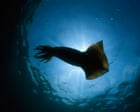
In this disorienting book, a poet argues we have been looking at nature – and ourselves – the wrong wayThe eastern breakwater of Granton harbour is almost 1km long, and swimmers can follow its crooked finger, heading straight out into the Firth of Forth, while benefiting from its reassuring presence. One Thursday lunchtime, I thought: why not, let’s give it a go, and headed for its tip. I felt cold, but, as I progressed, I seemed to grow strangely warmer. I did not notice the complaints from my body: the creeping numbness which proceeded from my fingers to my elbow, nor the coldness of my pee. Only by the time I exited the water, club footed and claw handed, did it hit me that I was hypothermic.The irony of this reckless exercise was that in my swim bag there was a book by Melanie Challenger called Alive: The Hidden Intelligence of the Living World. It’s an ambitious examination of the wisdom of bodies, a rhizomatic guide not just to our own, but also all the living forms around us: from bacteria to chimps. Her case is that we have ignored or misread the agency and purpose of bodies to our detriment; in a way it is a plea to listen to them. I wish I had read it before my ill-advised swim. Continue reading...
- Beginning Middle End by Valeria Luiselli review – a mother and daughter’s odyssey
 by Chris Power on Luglio 29, 2026 at 6:00 am
This journey of discovery from the US to Sicily tackles urgent themes, but is increasingly inward-lookingIn Grace Paley’s short story A Conversation With My Father, a request is made of the Paley-like narrator. “I would like you to write a simple story just once more,” her father says, “the kind Maupassant wrote, or Chekhov … Just recognisable people and then write down what happened to them next.” Her attempt, and its failure to impress him, is the action that powers the story. Valeria Luiselli’s fourth novel is propelled by a similar request, the daughter of the Luiselli-like narrator asking: “Will you finally write a novel with a beginning, a middle, and an end?” It’s a problem Luiselli has addressed before. In her 2017 book-length essay about undocumented migrant children, Tell Me How It Ends, she writes that the difficulty in telling their story “is that it has no beginning, no middle and no end”.Beginning Middle End charts the narrator’s efforts to corral life into a narrative. The father in Paley’s story would be similarly unimpressed. After a “slow, entangled” divorce, the narrator, a Mexican living in the United States, embarks on a European book tour with her 12-year-old daughter. She has a coil removed in Munich; her daughter loses a tooth in Prague; near Amsterdam they watch children learning to swim with their shoes on in case of floods. When summer comes, the pair fly to Catania in Sicily. The narrator’s grandmother grew up nearby. They stay in the apartment of a pianist who’s away on tour, with whom the narrator had a “brief and feverish encounter” the previous year. Continue reading...
- ‘We’ve always been wary of working together’: Val McDermid and Jo Sharp on writing a novel as a couple
 by Robyn Vinter on Luglio 28, 2026 at 3:38 pm
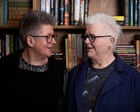
The bestselling crime writer and Scotland’s first female Geographer Royal had long kept their work separate, until a chance discovery about a doomed 17th-century expedition forced them to collaborateThe airy, modern house on the outskirts of Edinburgh shared by Val McDermid and Jo Sharp is surrounded by greenery and feels as though it was designed to provide enough space for two minds to think.Both women are high achievers in their fields, a Scottish power couple made up of the Queen of Crime and the Scottish Geographer Royal. Happily for them, there is normally no overlap in their work. Continue reading...
- This Booker longlist may have two previous winners, but it’s keen to experiment
 by Justine Jordan on Luglio 28, 2026 at 1:00 pm
Marlon James, Douglas Stuart and Elizabeth Strout are names we know, but there’s a welcome element of surprise elsewhere Previous winners Douglas Stuart and Marlon James lead Booker prize longlistThis year’s Booker longlist is led by two previous winners. Twelve years on from A Brief History of Seven Killings, Marlon James returns to Jamaica in The Disappearers, out in September: a polyphonic epic of a murderous mob attack on a gay theatre group in 1988 Kingston, and the two-decade aftermath of trauma and revenge that follows. A brutal expose of Jamaica’s homophobia, it’s also an energetic portrait of queer culture and the Caribbean diaspora. Douglas Stuart, whose debut Shuggie Bain won in 2020, is included for John of John, in which a young gay man returns to his childhood home on the Hebridean island of Harris, where his devout father is also hiding his sexuality. Both novels open up territory not often trod in literature, with Stuart illuminating faith, repression and the fading traditions of the Scottish Hebrides.It’s no surprise either to see a third nomination for Elizabeth Strout. The Things We Never Say introduces new characters to her fictional universe, in the story of a fiftysomething teacher with a secret in his marriage and a sadness in his heart. Strout has always been interested in class and deprivation in American society; the spectre of Trump brings a growing darkness, but as ever her spiky warmth and wisdom carry the reader through. The other big-name American author on the list is Emma Cline; Switzy, out in September, takes us inside the mind of a high flyer whose grip on the world is failing as dementia encroaches. David is taking his last journey, to a euthanasia clinic in Zurich, and on the way will hopefully make his final reckonings with friends and family while he can still recognise them. It’s a technical tour de force of the unreliable narrator, and a hugely moving account of life’s meaning as everything is stripped away. Continue reading...
- Previous winners Douglas Stuart and Marlon James lead Booker prize longlist
 by Emma Loffhagen on Luglio 28, 2026 at 1:00 pm
Chair of judges Mary Beard said each of the 13 books in contention for the £50,000 award ‘takes the reader to new places’Comment: This Booker longlist may have two previous winners, but it’s keen to experimentDouglas Stuart and Marlon James, two previous winners of the Booker, have been named on this year’s longlist, alongside three-time nominee Elizabeth Strout, in a collection that “rewards risk”.The 13 novels selected for the 2026 prize, announced on Tuesday, feature authors of seven nationalities across three continents, with almost half from the UK. Ten of the writers are appearing on a Booker longlist for the first time, including three debut novelists: Kenan Orhan, Rebecca Perry and Djamel White. Continue reading...
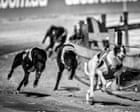
- Underdogs by Louise Powell review – a powerful debut with plenty of northern soul
 by Benjamin Myers on Luglio 28, 2026 at 8:00 am
A bereaved father and son bond over greyhound racing in an east Durham town in terminal declineThe adjoining villages of Easington and Easington Colliery in the coalfields of east Durham make the perfect case study of the shift from England’s industrial boomtime to terminal decline. Twenty miles from a major town or city, they’ve been left to languish ever since Thatcher went to war with the industry that made them. If you want to understand why the white working class feel abandoned today, go to Easington Colliery and its surrounding villages.It’s this community that Middlesbrough-born writer Louise Powell brings to life in a powerful debut set in the world of greyhound racing, or “flapping”. Underdogs is an utterly authentic depiction of an England that’s overlooked, but still very much alive. Pigeon lofts and flat caps, meat raffles and social clubs – all still exist, just very rarely in 21st-century novels. Continue reading...
- What If We Got AI Right? by Eleanor Drage review – avoiding apocalypse
 by Sophie McBain on Luglio 27, 2026 at 8:00 am
The academic’s ambitious guide to the ethics of tech falls short of its promise to provide meaningful answersThe AI ethicist Eleanor Drage believes that to thrive alongside artificial intelligence, humans need to recognise AI’s “humanity”. She means that while we often speak of AI as though it were some mystical, formless thing, it is the product of hours of human labour, in silicon and quartz mines, microchip factories and data labelling centres. If citizens want to wrest power from the tech companies that are building AI, it helps to understand clearly what they are selling us. This also means seeing through the marketing and hype: “the cloud”, that nebulous, distant place where your photos are stored, is just someone else’s computer; an AI “hallucination” is a system error or data labelling mistake; intelligence is a very broad – and potentially misleading – term.The story in Silicon Valley is that AI will either save us, ushering in a new era of prosperity and human longevity, or it will wipe us all out. Drage argues, convincingly, that big tech cannot possibly deliver on its utopian promises while it continues to chase profit and power above all else, and while it serves the interests of a narrow few. Meanwhile, the cultural obsession with the AI-induced apocalypse conveniently redirects attention from the practical conversations we could be having about how to make AI safer – by ensuring citizens have more power over how their information is used, and how AI models are trained and regulated, for example. Tech titans’ apocalyptic visions also create the false impression that AI safety is more important than climate change, geopolitical tensions and inequality, three problems that are already causing a huge amount of suffering and that, if addressed, would reduce many AI-linked risks too. Continue reading...
- Gaining Ground by Joan Barfoot review – Anne Enright celebrates a landmark feminist novel
 by Anne Enright on Luglio 27, 2026 at 6:00 am
Half a century on, this tale of a woman who abandons her children in search of her self remains thrillingly originalThere is a growing literature of maternal flight: novels about women who leave not just their husbands but also the children they have made. In the real world, men are the more frequent deserters; the connection of the father to family life is seen as contingent, while motherhood is revered as an intrinsic state. This means that women who “un-mother” themselves are doing something impossible: the connection between a woman and her child is not just emotional, but also creational. Joan Barfoot understands the inside-out nature of the logic involved in maternal obligation: “she created these other people and their need for her,” says Abra, the abandoning mother of Gaining Ground, “and now she must fulfil them.”Abra neglects to fulfil her children or their needs. The novel is rigorously and meditatively about the business of separation, which is also the business of becoming a single and undivided self. Continue reading...
- Lucy Caldwell: ‘Even your text messages fizz after reading James Joyce’
 by Lucy Caldwell on Luglio 24, 2026 at 9:00 am
The author on the power of folktales, being inspired by Ulysses – and the book that every woman should readMy earliest reading memory The summer my middle sister was born, my mum and I would walk to the shops at Cherryvalley, in east Belfast, to do her messages, and she’d buy me the latest issue of Storyteller, illustrated tales from around the world. It came with a cassette tape of actors reading the stories, a ding to tell you when to turn the page. My favourite was a Japanese folktale called The Goblin Rat. I was only just two, but I listened to it, entranced and terrified, until I could recite it by heart.My favourite book growing up Susan Cooper’s The Dark Is Rising series. I first read them aged 10 – I’ve read the title book every midwinter since, and read them last year with my own then-10-year-old son. They tell a haunting story of the age-old battle between the forces of dark and light, weaving in Arthurian legend, shot through with an adult melancholy that makes them as compelling now as then. Continue reading...
- Unsayable by Michael Cunningham review – The Hours author on the insecurities that powered his creative life
 by Alex Clark on Luglio 24, 2026 at 6:00 am
The American novelist and screenwriter’s memoir covers sex work, Virginia Woolf and Hollywood successAs an eight-year-old in comfortable, solid, suburban California, Michael Cunningham felt compelled to make art before he quite understood what it was, or could do: a painting of souls ascending to heaven, for example, in which paradise resembled the Griffith Park Observatory and the dead were all depicted in profile because their creator felt unequal to the challenge of full faces. There was also a cigar box covered in gold-sprayed macaroni and a clay representation of the animals on Noah’s Ark – anything, in fact, that would challenge the painting of a placid white chicken that hung in a gilt frame on his parents’ wall.If Cunningham moved on fairly rapidly from the visual arts, either sparing or denying us the fruits of a more fully formed talent, it wasn’t because the impulse to create had withered. Rather, it was that the experience of making material art had functioned as a temporary outlet, being less painful, less embarrassing – both emotions he ascribes to his young, sensitive self – than attempting to capture the world in words. Continue reading...
- The Midnight Train by Matt Haig audiobook review – a cosy, feelgood journey
 by Fiona Sturges on Luglio 23, 2026 at 3:00 pm
Actor James Norton brings a sense of gentle longing to this tale of an octogenarian looking back on the life he’s departedThe latest novel from the Reasons to Stay Alive author Matt Haig begins with an octogenarian man having a heart attack. Former business magnate Wilbur Budd is already feeling a bit peculiar when he receives a phone call from his ex-wife, Maggie, who he hasn’t heard from in years. “I wanted to hear your voice,” she tells him wistfully. Minutes after getting off the phone, Wilbur collapses on his front lawn and dies.What sounds like the end of a story is, in fact, the beginning as Wilbur finds himself standing on a train platform with his mind “reverberating as if from some giant cosmic cymbal crash”. A train arrives and a woman disembarks and introduces herself as Agnes. She is, she says, the ghost of a bookseller who once ran a shop Wilbur visited as a child. She will be guiding him in a voyage through his past, pausing at formative moments including his brother’s premature death and Wilbur and Maggie’s honeymoon in Venice. “This is death,” Agnes tells him. “Where your life flashes before your eyes. This is how it happens. Fast and slow. Like life … ” Continue reading...
- Air by Christian Kracht review – a metaphysical jigsaw puzzle
 by Houman Barekat on Luglio 23, 2026 at 6:00 am
A portal opens from our modern world of data centres and interior design into a medieval fantasy realm, in this playfully surreal tale from the author of EurotrashA reclusive interior designer named Paul travels from his home in Orkney to the Norwegian coastal city of Stavanger for a most unusual commission. A datacentre housing a vast internet server is located by a fjord on the outskirts of the city, and a prestigious arts magazine is paying him a large sum of money to give it a makeover. They want him to paint the interiors white – “not just any white, but the perfect white, the singular white”. Shortly after he arrives, a freak weather event causes a power outage, and Paul goes missing; meanwhile the magazine’s jaded editor, Cohen, takes an overdose of barbiturates.In alternate chapters a very different tale unfolds, set in a distant medieval world redolent of Norse mythology. A man, referred to only as “the stranger”, is nursed back to health by a nine-year-old girl who has shot him with an arrow after mistaking him for a deer. He is being pursued by a vengeful duke, and persuades the girl to join him on the run. Together they leave their plague-ridden town, traverse a barren wasteland and discover a subterranean stone city whose inhabitants live a communal existence, subsisting on seafood and kelp. Continue reading...
- Venus, Vanishing by Rebecca Birrell review – art, desire and the rise of the Third Reich
 by Gabrielle Schwarz on Luglio 22, 2026 at 8:00 am
This portrait of a Jewish painter in bohemian Berlin is filled with insightful observationsIn the summer of 1937, two exhibitions sponsored by the Nazis opened in Munich. For the Degenerate Art exhibition, hundreds of confiscated works by banned modern artists – including Paul Klee, Wassily Kandinsky, Pablo Picasso – were gathered: a derisive demonstration of the supposedly anti-German spirit of contemporary culture. The show was also meant as a counterpoint to the first Great German Art Exhibition, essentially an art fair for state-sanctioned work, which ran annually until 1944. The official style of Aryan art was traditionalist neoclassicism; popular subjects included idealised female nudes, pastoral landscapes and heroic battle scenes. Hitler was among the main buyers. You probably haven’t heard of any of those artists.What if one of them were secretly a Jew, working under a pseudonym? Rebecca Birrell’s debut novel imagines this scenario, telling the story of a fictional Jewish artist who comes of age in Berlin in the last days of the Weimar republic. Hannah Sherman is working as a seamstress for the family business when she learns that she is about to be married off. She runs away, finding lodgings using the “desirable Christian” name of Schmidt, and begins to realise her artistic ambitions. A free-thinking New Woman, she also takes two lovers: Saul, a museum curator, and Charlotte, a dancer at a lesbian bar where Hannah likes to sketch. Continue reading...
- On Thin Ice by Charlie Walker review – a Siberian adventure goes off the rails
 by Charlie Gilmour on Luglio 22, 2026 at 6:00 am
Moments of beauty and horror punctuate this account of an ill-timed sub-zero camping trip In late February 2022, Charlie Walker set off on a hiking holiday in northern Siberia. In temperatures as low as -50C, he intended to trek a thousand miles north along the frozen surface of the river Lena, then out across the solid Laptev Sea to the port town of Tiksi, before finally flying home to London. “The plan,” he writes, “was simple in concept.” A sub-zero camping trip through a region populated by wolves and bears and scarred by centuries of historical trauma, in a country that was about to invade one of its neighbours: what could possibly go wrong?On Thin Ice is Walker’s third travelogue. Previous excursions have included a 43,000-mile bicycle ride across three continents, a 1,000-mile solo walk through the Gobi desert, and a river trip down the Congo in a leaky canoe. When not performing incredible feats of forward motion, according to his website, he gives talks to business leaders on subjects such as “risk taking” and “the line between courage and recklessness”. Reading his latest, it’s clear he’s familiar with the terrain on both sides of that line. Continue reading...
- Social Darwinists to tech bros: tracing the long fight against equality in US
 by Martin Pengelly on Luglio 21, 2026 at 10:00 am
Historian Kim Phillips-Fein’s book Country of Lords looks back at the many men who have tried to fight against egalitarianism, from John Adams to Peter ThielThe historian Kim Phillips-Fein’s new book is published amid celebrations of the 250th anniversary of the declaration of independence and its truth “self-evident, that all men are created equal”. Country of Lords, however, is a history of Neo-Aristocrats, Social Darwinists, Tech Utopians, and the Long Fight Against Equality in America.Concise and hard-hitting, the book arrives at a time of glaring social and economic inequality, Phillips-Fein seeing Elon Musk “emerging as a trillionaire very much on people’s minds, with a deep level of discomfort, both fear and anger about what this portends”. Continue reading...
- These Wild English by Nicola Wilding review – explaining a mother’s drift to the far right
 by Fiona Sturges on Luglio 21, 2026 at 9:30 am
A documentary-maker probes family history and the darker corners of the internet to solve an urgent political puzzleWhen Sandra Forsyth began marching in support of the English Defence League, her daughter Nicola Wilding hoped it was a phase. The Cumbria-bred, Dover-dwelling Sandra was about to turn 60 and had been dealing with a lot of stress. Not only had her son been sentenced to two years in prison for armed robbery, but she was working at a home for adults with complex needs. She liked the job, but it could be gruelling – especially when clients hurled furniture at her or ripped sinks off walls.Then, in May 2013, came the death of Lee Rigby, a drummer with the Second Battalion of the Royal Regiment of Fusiliers who was murdered by two Islamist terrorists using machetes. Sandra didn’t know Rigby, Wilding notes, but his death nonetheless brought her pent-up rage to the surface. She began watching videos on Facebook by a man named Tommy Robinson, who wanted to know why the country’s brave soldiers were being murdered. By September of that year, she was protesting on the streets of London. Continue reading...
- Could AI be conscious?
 by William MacAskill and Lucius Caviola on Luglio 19, 2026 at 11:00 am
Experts believe it’s at least possible. We urgently need a plan to navigate the ethical implicationsIn January, the AI company Anthropic published a new constitution for Claude, its most advanced large language model (LLM), which contained the comment: “We are caught in a difficult position where we neither want to overstate the likelihood of Claude’s moral patienthood nor dismiss it out of hand.” A month later, Anthropic’s CEO Dario Amodei went on a podcast and said his company couldn’t rule out the possibility that Claude was conscious. Philosopher David Chalmers, who coined the phrase “the hard problem of consciousness”, has said there is a significant chance of conscious LLMs within a decade. And what about Claude itself? When asked during testing to estimate the probability that it is a moral patient, meaning that its wellbeing matters in its own right, it gave numbers ranging from 5% to 40% and stressed how uncertain it was.Modern AI systems are extraordinarily complex, and they are advancing fast. In terms of structural complexity and computational scale, by some measures a few are already in the range of a mouse brain, and at recent growth rates, they could reach the range of a human brain within five to 10 years. Continue reading...
- Hagitude author Sharon Blackie: ‘At 60 I wasn’t ready to give up, I was just starting’
 by Lisa Allardice on Luglio 18, 2026 at 8:00 am
The writer of cult hit If Women Rose Rooted is on a mission to bring folklore to modern readers. She talks about confronting her fears, communing with nature – and the power that comes with ageLike many of the wise women in her books, Sharon Blackie lives miles from anyone. Hers is the only house on the road winding through a valley deep in the Yorkshire Dales. The River Eden runs along the bottom of her garden, which overlooks the ruins of a castle built, as legend has it, by King Arthur’s father. The writer shares this romantic idyll with three border collies, six sheep, nine hens and her husband, David Knowles, a former RAF Tornado pilot.It seems an appropriate setting for an author who is on a mission to bring fairytales to modern readers. Blackie runs spiritual retreats and workshops at the nearby Broughton Sanctuary and publishes a popular Substack called The Art of Enchantment. Her books, including word-of-mouth hits such as If Women Rose Rooted and Hagitude, are a beguiling mix of memoir, mythology and eco-feminism – manifestos for a better way of living. Continue reading...
- The best books to read in July: new paperbacks from Andrew O’Hagan, Miriam Toews and Oyinkan Braithwaite
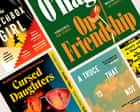 by Guardian Staff on Luglio 16, 2026 at 9:13 am
Looking for a new reading recommendation? Here are some fantastic new paperbacks, from the gripping story of an international murder case to a state-of-the-nation yarn*** Continue reading...
- What we’re reading: writers and readers on the books they enjoyed in June
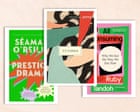 by Candice Carty-Williams, Patrick Freyne and Guardian readers on Giugno 30, 2026 at 6:24 pm
Candice Carty-Williams, Patrick Freyne and Guardian readers discuss the titles they have read over the last month. Join the conversation in the commentsI just finished reading Wimmy Road Boyz by Sufiyaan Salam. I absolutely adored this book, a fantastic combination of violence and vulnerability set on Manchester’s Curry Mile. I became completely attached to the three main boys, and I loved all of the perspective shifts to different characters throughout the book. I fully weeped at the end – it was an unexpected but completely understandable ending. 10/10, everyone should read this.Queenie Is Working on It is published on 2 July by Trapeze. To support the Guardian, order your copy from guardianbookshop.com. Continue reading...
- Children and teens roundup – the best new picture books and novels
 by Imogen Russell Williams on Giugno 26, 2026 at 11:00 am
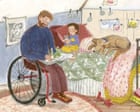
A mouse detective; a fresh take on the Odyssey; a dangerous wish; and the world’s most watched reality TV showMy Dad Can by Stephen Lightbown, illustrated by Claire Sahara Lemp, Quarto, £7.99Iris’s dad can turn into dinosaurs, unicorns, anything she imagines – though some people see Dad’s wheelchair and believe he can’t do anything. This soft-smudged, colourful picture book celebrates the playfulness and creativity of parenthood.The Fluffy Futon by Yuichi Kasano, translated by Cathy Hirano, Gecko, £12.99When Grandma spreads a futon on the sunny porch to air, it’s so fluffy that kittycat, Grandma, hen, chicks and the whole household join each other for a nap in this delightful picture book, perfect for enjoying at bedtime. Continue reading...
- Children and teens roundup – the best new picture books and novels
 by Imogen Russell Williams on Maggio 22, 2026 at 11:00 am
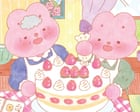
A bunny who loves to bake, illustrated poems about amazing animals and a YA verse novel of dancefloor salvationBan Ban’s Bakery by Elena Hiroko Magee, Do Re Mi, £12.99 Ban Ban the bunny loves baking with Grandma – but will she be able to turn Dusty Cottage into a bakery of her very own? A cute, enticing picture book full of mouthwatering, pastel-hued treats.Daddy Is Cleaning by Angel Dike, illustrated by Ebony Glenn, Nosy Crow, £12.99 Baby is helping with laundry, cooking and planting – so Daddy is cleaning, a lot! This tender picture book perfectly evokes the love, humour and exhaustion of managing a day’s chores with an enthusiastic toddler. Continue reading...
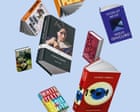
- The 100 best novels of all time
 by As voted for by authors, critics and journalists on Maggio 16, 2026 at 5:00 am
The top 100 novels of all time published in English, as voted for by authors, critics and academics worldwide. How many have you read? Continue reading...
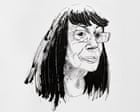
- ‘She made Mondays something to look forward to’: readers pay tribute to Carol Rumens, Guardian’s Poem of the week columnist
 by Guardian readers on Maggio 8, 2026 at 1:01 pm
Rumens, whose column ran for nearly 20 years and developed a loyal readership, died this week aged 81Carol was an excellent commentator on poetry, shrewd and deep-thinking but able to express her thoughts in plain English rather than academic jargon. Her taste in poems was eclectic and very original; one didn’t always share it, but it was never predictable or dull. Sheenagh Pugh, Shetland Continue reading...
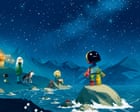
- Children and teens roundup – the best new picture books and novels
 by Imogen Russell Williams on Aprile 24, 2026 at 11:00 am
An imposter monkey, an underworld princess, art’s female trailblazers, and YA tales of fear, family and friendshipOur World: Nigeria by Bunmi Emenanjo and Diana Ejaita, Barefoot Books, £7.99Part of a delightful educational series from a brilliant inclusive publisher, this colourful, joyous board book whisks babies away to spend a day in Nigeria, learning to say hello in three languages and feasting on porridge, akara and plantain.Monkeypig by Huw Aaron, Puffin, £7.99What makes a real monkey? This rapturously silly picture book from the Waterstones prize winner follows Molly, a pig who blends in with her simian friends – despite head monkey Norman’s best efforts to detect the impostor. Continue reading...
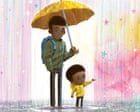
- Children and teens roundup – the best new picture books and novels
 by Imogen Russell Williams on Febbraio 27, 2026 at 12:00 pm
A mission to grow plants in the desert; a potato’s adventures; a film-maker’s dreams; wartime bravery; a feminist fantasy and moreThe Wonder by Tom Percival, Simon & Schuster, £12.99Daniel’s wet grey day seems like it will never get better – until he hears music and everything changes. A subtly beautiful picture book about finding small moments of joy and wonder.The Big Green by Ken Wilson-Max, Otter-Barry, £12.99Heading into the desert to plant seedlings with their family and neighbours, Maryam and Issa help to build the Great Green Wall of Africa in this rhythmic, colourful picture book, a rich celebration of community environmental action. Continue reading...